
AI-generated menus are flooding restaurants with eerily perfect, soulless food images-products of narrow, recycled data that leave diners uneasy and businesses exposed to backlash. The convergence effect is degrading not just aesthetics, but trust.
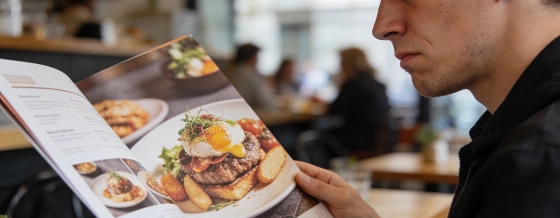
The illusion of appetizing perfection is cracking in restaurants across Europe and the US. Diners are recoiling from menus where every burger, bagel, and scoop of ice cream looks suspiciously flawless-symmetrical, glossy, and unsettlingly smooth. The culprit? Generative AI models, trained on homogenized data, are churning out food images that trigger discomfort rather than hunger.
"It's almost like an alien trying to make a pizza without understanding its core principles," Reality Defender CTO Alex Lisle told TechCrunch, summing up the unease that's spreading among both customers and restaurateurs. The phenomenon isn't just a matter of taste; it's a technical and cultural failure with real business consequences.
Il cuore del problema: dati riciclati e modelli convergenti
At the root is a feedback loop: AI models like those powering ChatGPT and Midjourney are trained on vast but narrow datasets, often dominated by the sanitized, stylized imagery of chain restaurant menus from the last decade. When these models are asked to generate a new menu, they regurgitate the same visual tropes-perfectly round scoops, shrimp curled into unnatural shapes, cheese that looks more like plastic than food. Each iteration, especially when restaurants tweak details like prices or item names, pushes the images further into the uncanny valley.
Lisle warns of "convergence"-a process where repeated training on similar or even AI-generated content degrades output quality. "Model collapse is almost like a mad cow disease... when you feed the outputs from one model back into itself, eventually the inbreeding becomes too much, and the whole thing collapses," he explains. While full collapse is rare, convergence is already visible: menus become more generic, less appetizing, and increasingly alien with every edit.
La reazione dei clienti e la scienza del disgusto
Customers aren't fooled. There's a growing, almost instinctive aversion to these AI-crafted images. Lee Rainie, Director of the Imagining the Digital Future Center at Elon University, notes, "People have an almost unexplainable sense about when they're looking at something that's AI-generated, compared with something that was real in the first place." This discomfort is more than anecdotal: researchers at the University of Duisburg-Essen have documented an "uncanny valley" effect, where food that looks almost real but not quite provokes more disgust than obviously fake images.
On social media, users like Labtec have demonstrated how repeated AI edits make food images progressively less realistic and more disturbing. The backlash is tangible-restaurants adopting these menus risk alienating their clientele, not just with aesthetics but with a deeper erosion of trust.
Oltre il menu: implicazioni per la fiducia e la verifica
The implications extend far beyond the dinner table. As Lisle points out, "Seeing and hearing has always been believing, to the point where even our court systems are entirely tuned to the idea that the gold standard in evidence is taped confessions and videotaped evidence. That's no longer the case. The world has fundamentally shifted, for good or for ill." The proliferation of AI-generated content-especially when it's indistinguishable from reality at first glance-undermines the credibility of visual evidence in every context, from advertising to the courtroom.
Startups like Reality Defender are now building entire businesses around detecting and verifying AI-generated media, a market that wouldn't exist if the technology hadn't already begun to erode public confidence in what we see and consume.
Restaurants chasing efficiency or novelty with generative AI are discovering the cost: a menu that looks perfect but feels wrong, a customer base that senses the artificiality, and a brand that risks being associated with the cold sterility of machine-made food. The lesson is clear-when AI is trained on sameness, it delivers sameness, and in the world of food, that's a recipe for failure. Until the industry learns to value authenticity over algorithmic convenience, expect more menus that unsettle rather than entice-and a public ever more skeptical of what's real.