
A used Ambernick Win600 now costs just 99 euro and, with the right tweaks, can become a surprisingly capable retro and indie gaming handheld. Here's how enthusiasts are unlocking its true potential.
The Ambernick Win600 was easy to overlook when it first launched. Now, with used units selling for 99 euro, it's become one of the best deals in handheld gaming-if you're willing to tinker. Retro fans and hardware modders are picking up this x86 portable not for its stock performance, but for what it can become with a few upgrades and some open-source software.
Anbernic originally pitched the Win600 as a flexible device with broad third-party software support, including the rare ability to run Android games on x86 hardware. This openness has attracted a small but active community of Linux users and modders. Out of the box, the Win600 ships with Windows 10, but its architecture is closer to a budget mini-PC than a locked-down console, making it a good candidate for experimentation.
Inside, the Win600 runs on an AMD Athlon Silver 3050e dual-core processor, Radeon RX Vega 3 graphics, 8GB of DDR4 RAM, and a 256GB SATA/M.2 2242 SSD. The 5.94-inch IPS screen has a 1280×720 resolution-plenty for retro and indie games. Reviews note that the device can briefly draw up to 18W, and performance improves noticeably after BIOS tweaks and hardware upgrades.
"The Win600's ability to run both Windows and Linux, combined with its support for third-party software, makes it a unique proposition in the European handheld market-especially at its current price point." - Anbernic, Official Product Positioning
The original specs were never meant for modern AAA games. But that's not the point. The real appeal is how upgrades and open-source operating systems can turn the Win600 into a flexible, low-cost machine for classic and indie titles.
Upgrade strategies that make a difference
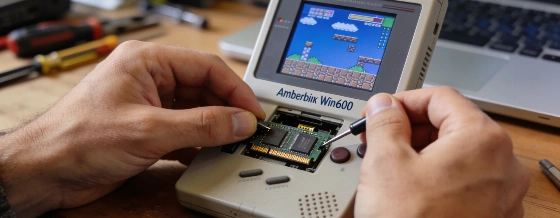
Owners willing to open up the Win600 are finding that bumping the RAM to 16GB (even if it stays single-channel) and switching from Windows 10 to Bazi OS-a lightweight Linux distro for gaming-make the device much more usable. Tweaking the BIOS to maximize RAM speed and adjust the TDP (up to 18W) squeezes out extra performance. These changes don't just improve frame rates; they make multitasking and emulation possible on hardware that once struggled with basic tasks.
This hands-on approach is familiar to anyone who's followed the mini PC scene, where enthusiasts have shown how much value can be pulled from modest hardware. As reported earlier, even devices with soldered RAM and slow SSDs can find a following if the price and flexibility are right.
Performance: strengths and limits
With upgrades, the Win600 handles retro and indie games at 720p smoothly. Hollow Knight: Silksong, Left 4 Dead 2, and Half-Life 2 run without issues. Lighter games like Shredder's Revenge and the original Skyrim keep stable frame rates, making the device a solid pick for gaming on the go. But the hardware's limits are clear: Hades 2 and Dirt 3 show the bottlenecks of a dual-core CPU and single-channel memory, with stuttering and uneven performance that no software tweak can fully fix.
Thermal management is a trade-off. The 18W TDP cap keeps heat and noise down, but the device can throttle under heavy load. The SATA SSD works, but it's slower than the NVMe drives now common in other portables. And with only one RAM slot, there's no way to get dual-channel memory-something even the most determined modder can't change.
Who gets the most out of the Win600?
For retro and indie gaming fans, the Win600 is a rare bargain. Its small size, upgradable RAM, and open software ecosystem make it a playground for anyone who values flexibility over raw power. Some users are even turning it into a "cyber deck"-a portable Linux box for coding, emulation, or basic productivity. At 99 euro, it's hard to find a more versatile x86 handheld.
But if you're hoping for a Steam Deck rival, this isn't it. The Win600's hardware limits-single RAM slot, SATA SSD, capped TDP-aren't going away. Anyone looking for modern gaming or heavy multitasking should look elsewhere. This is a device for people who know what they want: affordable, portable, and endlessly tweakable hardware for classic games and open-source projects.
The Win600 shows how the right price and a community of tinkerers can give new life to overlooked hardware. It won't match high-end handhelds, but for those willing to get their hands dirty, it offers real value. In a market focused on specs and benchmarks, the Win600 is proof that flexibility and price still matter-and sometimes, the best gaming device is the one you build yourself.