

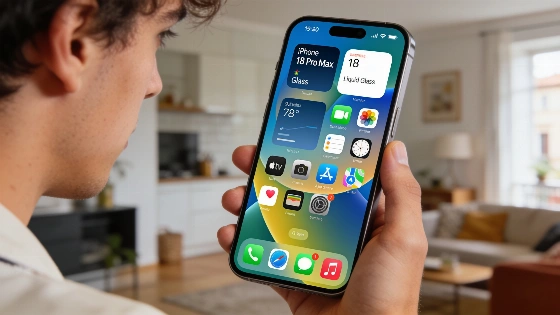
Apple launches the iPhone 18 Pro Max with iOS 27, a new Liquid Glass interface, and the A20 Pro chip. Siri AI arrives in beta, bringing smarter on-device help and advanced image editing. Performance and memory architecture take a big step forward.
The iPhone 18 Pro Max is not just another update. With iOS 27 and the new Apple A20 Pro chip, Apple is raising the bar for what a flagship phone can do. The phone feels faster right away. The interface is more flexible. But the real shift is Apple's focus on AI and giving users more ways to make the phone their own.
The Liquid Glass interface is at the center of this change. It's not just for looks anymore. Users now get detailed control over transparency, moving past the old on-or-off options. The system can now separate busy backgrounds from menus and toolbars, cutting down on clutter. Icons are sharper and simpler. In Settings, a new Appearance section lets you pick accent colors or even switch to a monochrome, liquid look.
Personalizzazione e controllo senza precedenti
Lockscreen customization is now real. Always-on and StandBy modes are available on all models. You can change every part of your Lock Screen-wallpapers, widgets, shortcuts-without limits. The homescreen is just as flexible. You can hide whole pages of apps, make icons bigger, or remove app names for a cleaner look. XL widgets, once only on iPadOS, now let apps like Calendar fill an entire page. You decide how much information you want to see.
Notifications and multitasking work much like before, but with some polish. The Notification Center, which you reach from the top-left or Dynamic Island, is now tied to the Lock Screen. The Control Center has more toggles and widgets, and some can expand. The Dynamic Island can now show up to three Live Activities at once. You can run timers, music, and calls together. The Task Switcher stays the same-just the familiar card-swiping you know.
Apple подтвердила чип A20 Pro для iPhone 18 Pro/Pro Max; в независимых обзорах и разборе указывается, что это первый iPhone-чип на 2-нм техпроцессе, а публично повторяемые спецификации включают 6-ядерный CPU и улучшения по AI/графике.
Siri AI e Apple Intelligence
The biggest change is Apple Intelligence, led by the new Siri AI. It's still in beta and only available by waitlist, and not yet in the EU. Siri AI uses Google's Gemini models and handles requests on the device or through Apple's Private Cloud Compute. This keeps your data out of reach for Apple and outsiders. The new Siri app remembers your past chats. On iOS, you can now call up Siri from the Dynamic Island. On iPadOS 27 and macOS 27, it will also work with Spotlight.
Siri AI's voice sounds more natural and can be customized. Dictation is more accurate. Siri can use your personal info-messages, emails, photos-inside Apple's own apps, and will soon work with third-party apps as they add Spotlight support. Siri AI can answer questions about what's on your screen or search the web for up-to-date info. Conversations sync across devices with iCloud. The Camera app will soon get a Siri mode for real-time questions about what you see, like splitting bills or checking food nutrition. Writing Tools powered by Siri AI are now built into the system. They can draft or polish text in Mail, Messages, and most third-party apps, with automatic proofreading as you type.
One feature everyone gets right away is advanced image editing. New Extend and Reframe tools, plus a smarter Cleanup function, are built in. Apple is not just following the AI trend-it's putting these tools into daily use.
Apple A20 Pro e architettura di memoria
The A20 Pro chip is a big step up. It's made with a 2nm process and brings desktop-level CPU cores, a stronger 7-core GPU, and doubles the Neural Engine to 32 cores. Memory bandwidth is up 50% with a new 96-bit bus and side-by-side DRAM. The vapor chamber is three times bigger, which helps keep heat under control. The A20 Pro gives a 10% boost in multi-core and a 22% jump in single-core performance over the A19 Pro. After 30 minutes of heavy use, the CPU still runs at 84% of its peak. The GPU holds 57% of its top speed, which is still strong for a flagship phone.
Apple's newsroom says the iPhone 18 Pro Max was announced on September 22, 2026. The US starting price is $1,299. Colors include burgundy, glacier, silver, and black. European prices and launch dates will follow Apple's usual rollout, depending on AGCOM regulatory requirements for device certification and privacy.
Storage now goes from 256GB up to 2TB. Apple uses TLC NAND for smaller sizes and QLC NAND for the 1TB and 2TB models. The catch: when QLC storage is more than 60% full, write speeds can drop to 40% of TLC speeds. This tradeoff keeps big storage models affordable as memory prices climb, but power users should keep this in mind.
Apple's hardware strategy matches what we've seen in its desktop line, as reported earlier. Performance and AI come first, even if it means moving away from older value tiers.
Un ecosistema sempre più integrato
Apple's built-in apps-Photos, Music, TV, Maps, Notes, Weather, Wallet, Files, and others-are still tightly linked to iOS, with many features tied to Apple's subscription services. Apple plans to let Siri AI's contextual smarts work with third-party apps, which could make the ecosystem even harder to leave if developers join in.
The iPhone 18 Pro Max is not just a hardware or software update. Apple is blending both into a platform where speed, customization, and AI are all connected. The A20 Pro's faster single-core speed and bigger memory bandwidth, the flexibility of iOS 27, and the promise of Siri AI set a new bar for flagship phones. Apple is willing to make tradeoffs-like using QLC storage to keep prices down-but the goal is clear. The iPhone 18 Pro Max is built to keep Apple ahead in both performance and user experience, even as what we expect from a smartphone keeps changing.