
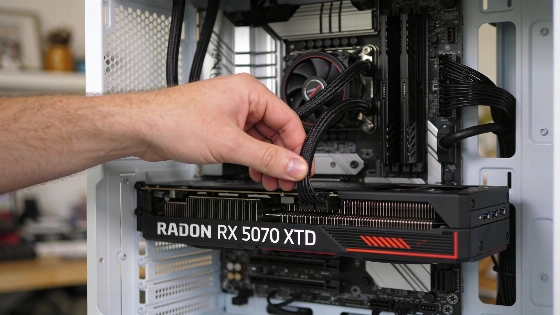
Radeon RX 9070 XT now costs less than the GeForce RTX 5060 Ti 16GB at Newegg. Hardware reviews this week show big swings in GPU, monitor, and case value, with clear winners and losers.
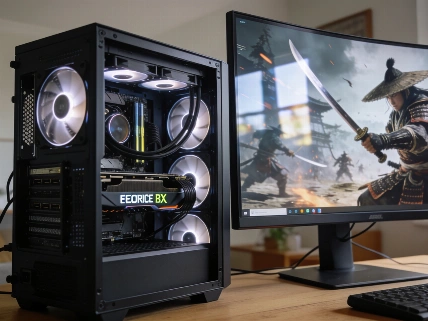
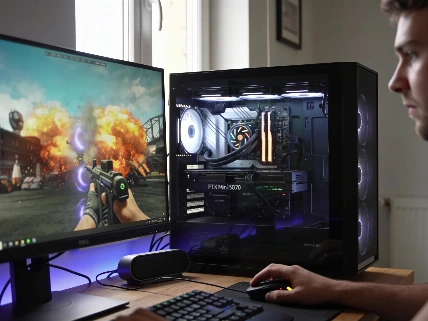
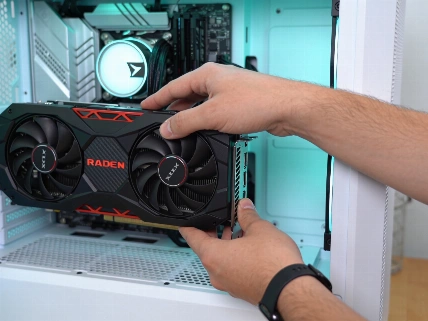
Newegg just listed the Radeon RX 9070 XT for less than the GeForce RTX 5060 Ti 16GB. That's not how the market usually works. Gamers now face a direct showdown. TechSpot's numbers are blunt. The 9070 XT beats the 5060 Ti 16GB by up to 81 percent in 007 First Light at 1440p Medium. In Spider-Man 2 at 1440p Very High, the gap is 60 percent. In the US, the 5060 Ti 16GB starts at $780. The 9070 XT? $740. In Australia, the 5060 Ti runs A$1,049-A$1,129. The 9070 XT starts at A$1,149. Sometimes, Radeon is even cheaper. At 4K, the 5060 Ti can cost up to 57 percent more per frame. NVIDIA's only real edge is in local AI work. CUDA support keeps GeForce cards moving.
Memory prices are squeezing both sides. The 5060 Ti's GDDR7 now sells for over 80 percent above MSRP. The 9070 XT's GDDR6 is at least 23 percent higher than its baseline. In late September 2026, Micron ended production of its 2GB GDDR7 chips. That move shrinks the supply for RTX 50-series cards. Shortages could get worse. NVIDIA now has just two suppliers for 2GB GDDR7. The company is shifting to 3GB GDDR7, mostly for AI hardware. This change is already pushing up prices and making gaming cards harder to find.
Thinking about the 5060 Ti's 16GB versus the 8GB? Tests show the extra memory only helps in certain cases. The bigger story is a global crunch in DRAM and GDDR. Manufacturers are chasing AI profits, not gaming. That's driving up prices everywhere. TrendForce points to this supply squeeze as the main reason for the latest GPU and memory price hikes. The pressure is not going away. AI demand keeps growing.
Micron's exit from 2GB GDDR7 production leaves NVIDIA's RTX 50 series with just two memory suppliers, increasing the risk of shortages and price volatility for gaming GPUs.
Nuove schede e test inediti
AMD's RX 9050 4GB finally landed in reviewers' hands. Hardware Unboxed had to buy a CyberPowerPC desktop just to get one. The card keeps the 8GB model's 1,024 stream processors. But the memory bus is cut in half to 64 bits. Bandwidth drops to 144 GB/s. The result? Across 18 games at 1080p, the 8GB RX 9050 is 37 percent faster. Intel's Arc B570 beats the 4GB RX 9050 by 44 percent. In Rainbow Six Siege X, the 4GB card falls from 180 to 111 fps. VRAM isn't even full. Bandwidth is the real problem. TechSpot doesn't mince words: this should have been called the RX 9040. AMD kept review samples away from the press, then released a slower card with the same name. That confuses budget buyers. Anyone looking at a prebuilt with "RX 9050" on the box needs to check the memory specs before buying.China's Lisuan LX 7G100 just got its first deep Western review. PC Games Hardware tested the 12GB, 192-bit GDDR6 card. It's built on TSMC N6 and hits 24.6 TFLOPS only with its dual-issue trick. There's no dedicated ray tracing or matrix hardware. In 1080p raster tests, it's 23 percent ahead of a GTX 1060 6GB. But it only delivers a third of an RTX 5060's performance. Games that need hardware ray tracing, like Doom: The Dark Ages, won't run. Still, the LX 7G100 is a step up from Moore Threads' MTT S80. It's more compatible and uses less power at idle. At about $401, it's not a global threat. But Lisuan got most modern games running on a first-gen card. That's a milestone. The real question is whether future drivers can turn novelty into real competition.
Monitor e case tra velocità e valore
Sony's INZONE M10S II and Acer's Nitro XV273U F5 are locked in a 540 Hz race. Sony's 27-inch QHD OLED, praised by Tom's Hardware and PC Gamer, hits 350 to 540 fps in Doom Eternal. Motion resolution is perfect. The 720 Hz mode drops to 1280×720. The matte coating is sharp but gets harder to clean over time. At $1,099, it goes up against bigger 4K and 5K2K OLEDs, like the Alienware AW3926QW featured in our earlier breakdown. For esports diehards, the INZONE M10S II could be the top pick. Mainstream buyers should think twice.
Acer's Nitro XV273U F5 is an IPS panel. Tom's Hardware gave it Editor's Choice. It's the first LCD to match OLED's gaming feel. At 540 Hz, motion blur and input lag are nearly gone. There's a 1,000 Hz mode at lower resolution. Native contrast is close to VA levels. Color accuracy is strong. But there are no USB ports and HDR contrast is limited. For anyone worried about OLED burn-in, this is the best LCD option right now.
Case reviews show a split between nostalgia and value. Corsair's Warthog brings back the C70's military look on a tweaked Frame 4000D. Reviewers like the style and build. Cooling is just okay. The price is high-$179.99 for the base, $199.99 for the RS. Steel chassis and real handles are rare now. Buyers pay for nostalgia. On the flip side, NZXT's S5 RGB is all glass, with a 360 mm RGB fan pre-installed for $49.99, or $59.99 for the Deluxe. Guru3D and TweakTown call it a strong value for first-time and budget ATX builders. NZXT is upfront about the trade-offs: no BTF support, limited storage, no GPU anti-sag bracket. For anyone counting every euro, the S5 RGB is the anti-Warthog. It's practical as memory prices keep rising.
Motherboard, alimentatori e periferiche sotto la lente
MSI's PRO B550M-P (2026) wraps up the company's AM4 refreshes. It's a basic microATX board priced between $75 and $89. You get PCIe Gen4 x16, a Gen4 main M.2 slot, and a second Gen3 M.2. There's no Wi-Fi and no VRM heatsinks. Still, VRMs stayed at 57°C during long Cinebench R23 multicore runs. The main issues are the second M.2 and top x1 slots sitting under the GPU, and not enough fan headers for AIO users. For anyone with AM4 parts, it's a simple, affordable home.
Gamdias' Thor P2 1350P power supply promises 1350 W of ATX 3.1 power, Rubycon capacitors, and a 12-year warranty for under $200. But TechPowerUp's review says the electrical performance doesn't match the marketing. The Thor P2 series also launched without Cybenetics certification. Cybenetics accused Gamdias of using its badge without permission on the HELIOS P2 line. At this wattage, it's safer to stick with a proven platform.
On the peripheral side, Logitech's G Pro X3 Superstrike tweaks the X2 formula. It drops 2g to 59g and cuts click latency to 0.12 ms at 1K polling. That's less than half the X2's 0.31 ms. The Shortcut and Club386 both say the changes are subtle in hand. The price jumps to $199.99. For new buyers, the X3 is the clear pick. X2 owners can skip the upgrade.
Prestazioni dei giochi e limiti software
TechPowerUp tested 35 GPUs in the early access build of Silent Hill: Townfall. The game runs on Unreal Engine 5 with DirectX 12 and Lumen. The ray tracing toggle just switches Lumen between software and hardware. "Off" isn't pure raster. Settings are locked in a binary blob. That blocks the usual .ini tweaks PC players use to fix traversal stutter. Even with these quirks, TechPowerUp liked the game's atmosphere. zWORMz Gaming's RTX 4060 run showed the usual UE5 stutter issues.
This week's hardware reviews send a clear message. Value is shifting fast. Buyers who stick to old habits risk paying more for less. AMD's RX 9070 XT price drop is a wake-up call. NVIDIA's AI strength keeps its cards moving, even as gaming benchmarks slip. Monitor and case choices now split between high-end features and budget basics. Even peripherals and motherboards are getting real upgrades. When the faster card is suddenly the cheaper one, only sharp buyers win.