
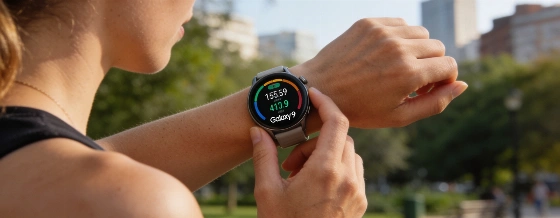
Samsung Galaxy Watch9 introduces a faster processor and a broader set of health features but leaves battery life and design largely unchanged. For users in the Samsung ecosystem or those with older models, it stands as the most complete Galaxy Watch yet.
The Galaxy Watch9 arrives with more health data, a new processor, and a slightly larger battery. But for anyone expecting a major leap, the changes are modest. Most of the updates are tucked into an already crowded set of wellness metrics, which can feel more overwhelming than helpful.
Health tracking is where Samsung is putting its energy. The Watch9 now monitors Hearing, Vitals, Sleep Apnea, Daily Cardio Load, Fitness Index, and Heart Health Score, adding to an already long list of fitness tools. Some features, like Hearing-which warns you about unsafe noise levels-are genuinely useful. Vitals tracking sets a baseline for blood oxygen, heart rate, HRV, respiratory rate, and skin temperature over a week, flagging changes you might otherwise miss. Sleep Apnea detection, cleared by the FDA, uses Samsung's algorithm to spot breathing issues and matches the accuracy of the Apple Watch Series 11 and Google Pixel Watch 5 in direct comparisons.
Not every new metric is as helpful. Daily Cardio Load and Fitness Index try to boil down complex health data into single numbers, but their real-world value is limited. The Fitness Index, for example, only appears after you log several days of workouts, sleep, and body composition, and is best for tracking trends over time-not as a quick health check. Heart Health Score needs calibration with a separate blood pressure cuff, a step most people will skip, especially since Apple and Oura offer hypertension alerts without extra hardware.
Hardware changes and user experience
Inside, the Watch9 uses Qualcomm's Snapdragon Wear Elite platform, which makes apps and menus feel faster. Wear OS 7 adds more customizable widgets and live app updates. The new raise-to-talk Gemini feature lets you activate Google's AI assistant by lifting your wrist-a trick Google's own Pixel Watch has had for two generations.
Battery capacity gets a small boost: 390 mAh for the 40-mm model and 445 mAh for the 44-mm. In practice, battery life is still the main limitation, with about 25 hours of use if you keep the Always-On Display on. That covers a full day and night, but you'll still need to charge regularly. Both Samsung's estimates and independent reviews put battery life between 30 and 40 hours, depending on settings. Testing shows the 40 mm Watch9 can last about 41.5 hours with Always-On Display off, and about 26 hours with it on. The 44 mm model's battery is only a slight increase from the previous generation. Charging takes about 100 minutes, which is more than twice as long as the Pixel Watch 5. The AMOLED display is unchanged, still offering 3,000 nits of brightness and strong durability, with IP68, 5ATM, and MIL-STD-810H ratings.
Design-wise, Samsung keeps its "squircle" shape-a round display inside a square bezel with rounded corners. This leaves some unused screen space and collects dust in the corners, but the watch is comfortable to wear. The two-button layout remains: the top button for home and shortcuts, the bottom for back and workout controls. The buttons are responsive, but ending workouts still takes too many steps, which can be frustrating during exercise.
Fitness bands and daily wear
Samsung offers silicone Sport, two-tone Misty, and nylon Fabric bands. The Sport Band, tested during runs and sweaty workouts, stayed secure and comfortable without causing irritation. The Watch9's durability and water resistance make it a good fit for daily activity and light outdoor use, but it's not built for rugged adventures like the Galaxy Watch Ultra2.
If you're already using Samsung devices or upgrading from an older Galaxy Watch, the Watch9 is the most complete option so far. Owners of the Watch8, though, won't find much reason to upgrade, since the core experience hasn't changed. The watch works best with Android, and some features only work with Samsung phones, keeping users inside the brand's ecosystem.
Comparisons and industry context
Samsung's step-by-step approach is in line with the rest of the wearable market. The focus on health metrics is similar to what ASUS did with the Ascent QN10, where performance gains come with targeted new features instead of a full redesign. In both cases, the result is a product that refines rather than reinvents.
Adding more health features instead of improving existing ones is a mixed bag. The Watch9 now matches or beats rivals in the number of wellness tools, but the sheer amount of data can be confusing for users who just want clear, actionable advice. The hardware is solid, the display is still excellent, and the new processor is fast, but battery life and some design quirks remain. For first-time buyers or those with older devices, the Watch9 is a strong choice. For everyone else, it's a reminder that more features don't always make for a better experience.