

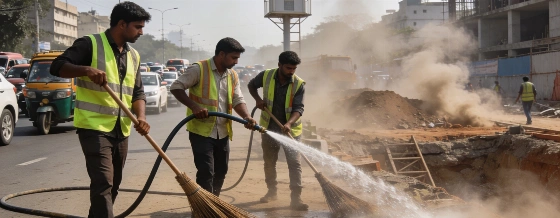
Delhi Environment Minister Manjinder Singh Sirsa has ordered district-level action plans and real-time hotspot mapping to tackle air pollution, demanding strict dust control and coordinated enforcement across the city's most affected zones.
Delhi's approach to air pollution is shifting, with Environment Minister Manjinder Singh Sirsa telling district officials to find the worst hotspots, map every source, and show real results-quickly.
In recent meetings with district magistrates from East, North-East, South-East, and South Delhi, Sirsa set out a direct plan. Districts are now expected to use AQI monitoring data to identify pollution hotspots and break down the causes at each site-road dust, traffic jams, vehicle emissions, construction debris, illegal parking, open land, and burning of waste or biomass.
Targeted action and clear accountability
Officials must examine every hotspot within a 3-kilometre radius and list all activities that add to the problem. For each source, they need a specific action plan, naming the agency in charge and setting a deadline. Sirsa has told departments to coordinate closely, assign responsibility, and make sure pollution-control steps are actually carried out, not just announced.
Dedicated monitoring teams will keep watch around the clock, focusing on dust, illegal industry, and open burning. Departments must submit Action Taken Reports, showing what's been done, what's left, and when it will be finished. Progress will be checked again in 15 days, leaving little room for delays.
State pollution control boards should focus on identified air pollution hotspots and prepare practical action plans for mitigation, reinforcing the enforcement push across the NCR.
Commission for Air Quality Management
Strict controls on construction dust
One of the first steps is enforcing dust-control rules at construction and demolition sites. Sirsa has told agencies to make sure these rules are followed everywhere, since unchecked dust is a major reason for Delhi's poor air. The government is also preparing to strengthen its winter pollution measures before the worst smog arrives.
Area MLAs, district magistrates, police, MCD officials, and senior staff from all departments are now involved, each expected to help with district-level plans and on-the-ground action. The message is clear: coordinated, source-specific enforcement is now required, not optional.
Delhi's government has often been criticised for slow or piecemeal responses to its air pollution crisis. This time, the Minister's approach is more proactive, with data-backed enforcement, clear responsibility, and short review cycles. If district teams follow through, Delhi could see lasting improvements in air quality. The real test will be whether these plans last beyond the next review-and whether residents notice a difference.
On the technical side, the Commission for Air Quality Management (CAQM) reports that its Flying Squads have carried out 28,547 inspections across the NCR, ordering 1,829 closures and later allowing 1,479 resumptions after checks. In just 15 days, 150 targeted inspections took place, including 98 in industry and 45 for diesel generator sets, showing a data-driven approach. For Italian readers, this is similar to the compliance systems used by AGCOM in telecom, where real-time monitoring and fast reporting are standard for oversight.