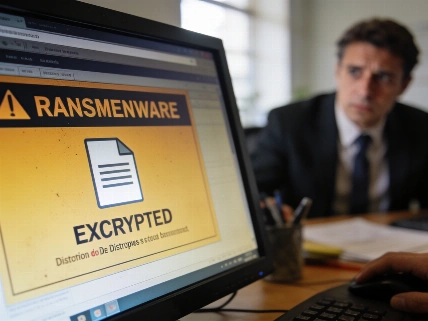

RansomHouse has named the Namibian Defence Force as a victim on its dark web site, but so far, no proof of a breach or stolen data has surfaced. Security researchers say the claim remains unverified and lacks technical evidence.
RansomHouse has named the Namibian Defence Force (NDF) as a victim on its dark web leak site, but so far, the group has not provided any evidence of a breach or data theft. There are no file samples, proof-of-compromise, or negotiation details-just the claim itself.
Yazoul Security, a threat intelligence firm, first noticed the listing around 12 September 2026. According to their report, the only information posted is general background about the NDF, not actual documents or data from its systems. The group identified the NDF by its domain, mod.gov.na, but Yazoul Security has not confirmed whether any incident actually took place. RansomHouse has not shared technical details, file listings, or even the amount of data it claims to have.
Evidence is lacking, and caution prevails
Cybersecurity researchers agree: without public evidence-such as leaked files or credential dumps-the RansomHouse claim cannot be considered confirmed. Yazoul Security warns that ransomware group announcements should be treated as allegations unless there is independent verification. The NDF has not commented publicly, leaving the situation unclear.
On 19 September 2026, the Namibian Cyber Security Incident Response Team (Nam-CSIRT) acknowledged unauthorized activity within the Ministry of Defence and Veterans Affairs network and said an investigation was underway with the ministry. According to Xinhua, Namibia's national broadcaster NBC reported that files allegedly linked to the NDF-with directory names like "Commander", "Defense", "Military", "Financials", and "Personal"-were circulating online. However, NBC stressed that the circumstances and authenticity of the incident were still being investigated. The presence of these directories alone does not prove a breach of NDF systems.
Nam-CSIRT has stated it is working closely with the Ministry of Defence and Veterans Affairs to investigate the incident, provide technical support, and restore affected systems, while also reviewing the case to strengthen the ministry's cyber defenses.
Adding to the uncertainty, ParanoidLab's exposure report-published via Ransomware.live-mentions six passwords and 51 cookies tied to the supposed exposure. But the report does not show that these credentials came from a breach of NDF systems. There are no technical indicators or access instructions, making it impossible to judge the credibility of the claim based on what is currently available.
RansomHouse and its uncertain reputation
Unlike well-known ransomware groups with a history of major leaks, RansomHouse has a thin and poorly documented track record. Yazoul Security points out that there is little public information about the group's tools, access methods, or technical operations, making it hard to assess the current claim against the NDF. Previous RansomHouse claims-such as those involving Hospital Clínic de Barcelona and the California School Employees Association-were also reported as unverified, with no confirmed evidence or leaked data in those cases.
In the broader context of ransomware threats, this lack of substantiation stands out. In other incidents, attackers have published stolen data or technical proof. As reported earlier, ransomware attacks elsewhere have often been traced to credential theft and weak defenses, with real consequences for victims. Here, the absence of hard evidence leaves the NDF's alleged exposure unproven.
Implications and editorial assessment
If the RansomHouse claim were ever confirmed, a breach of a national defence organization could have serious consequences, potentially exposing sensitive communications, internal documents, or personnel data. For now, though, the story is defined by what is missing: proof. The pattern of unverified claims, lack of technical detail, and the NDF's silence all point to a situation where caution is necessary. Until ransomware groups provide verifiable evidence, their listings should be seen as pressure tactics, not established breaches. At this stage, the Namibian Defence Force is simply a name on a list.