
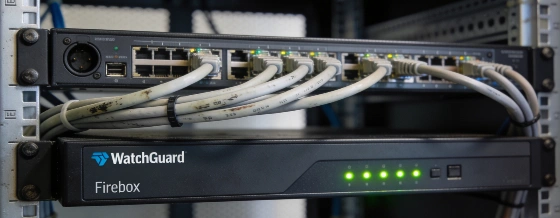
A critical WatchGuard Firebox vulnerability is now fueling ransomware attacks, with CISA confirming active exploitation and experts warning that slow patching leaves thousands of devices at risk. Teams are urged to update immediately and not wait for official ransomware flags.
Ransomware operators are already exploiting a WatchGuard Firebox vulnerability that sat unpatched on thousands of networks for months, while security teams waited for an official warning that came far too late. The Cybersecurity and Infrastructure Security Agency (CISA) has now confirmed what attackers knew all along: the out-of-bounds write flaw tracked as CVE-2025-14733 is being used in real-world ransomware campaigns.
La conferma di CISA e la realtà delle patch
CISA's addition of CVE-2025-14733 to its Known Exploited Vulnerabilities (KEV) catalog last December should have triggered urgent action. Instead, many organizations treated the KEV listing as a bureaucratic footnote, not a red alert. Collin Hogue-Spears of Black Duck is blunt: "Security leaders must treat a KEV listing for an unauthenticated, internet-facing firewall RCE as the ransomware warning itself." He insists that every internet-facing appliance CVE in the KEV deserves the same one-week remediation urgency as federal mandates, regardless of whether the ransomware field is set to "Unknown" or "Known."
Tempistiche e silenzi che favoriscono gli attaccanti
Jacob Krell of Suzu Labs points out that CISA quietly flipped the ransomware flag for CVE-2025-14733 from "Unknown" to "Known" this week-nine months after the vulnerability entered the KEV. In 2025 alone, CISA updated this flag on 59 vulnerabilities, sometimes years after initial disclosure, and never with a public announcement. "The gap reflects CISA's confirmation timeline. Ransomware operators were almost certainly exploiting this within days of disclosure," Krell notes. The lesson: waiting for an official ransomware flag is a losing strategy.
Conseguenze operative e raccomandazioni tecniche
Teams running WatchGuard Firebox appliances are now scrambling to patch to Fireware 12.11.6, 2025.1.4, or 12.5.15. But patching alone is not enough. Krell warns that attackers have been exfiltrating configurations and management databases, so every credential on the appliance must be rotated-even if the patch is already applied. He also highlights a disturbing pattern: WatchGuard shipped an almost identical pre-auth remote code execution bug, CVE-2025-9242, just three months before this one. "Same bug class, same product. I'd plan for a third," Krell says.
Un problema di classe di vulnerabilità
Adrian Culley of iCounter sees a deeper issue: this is the second near-identical out-of-bounds write in Firebox in three months. The patch cadence, he argues, looks less like remediation and more like "whack-a-mole" against a persistent bug class in the same code path. The flaw is unauthenticated, low-complexity, and reachable pre-auth wherever IKEv2 VPN or a branch-office tunnel to a static gateway is configured-precisely the kind of always-on, internet-facing service that firewalls are supposed to protect. "That's [standard] T1190, external-facing exploitation, straight into whatever lateral movement the ransomware crew brings next," Culley explains.
Impatto reale e numeri ancora preoccupanti
Despite patch availability, Shadowserver still counts several thousand exposed Firebox devices-down from over 115,000 in December, but nowhere near zero. These are not theoretical risks: these devices sit directly on the network boundary, and attackers have already demonstrated their willingness to exploit them. Culley's advice is precise: patch, then verify that IKEv2 and branch-office VPN configurations match expectations, and ensure that post-compromise lateral movement detection is actually tested on this device class.
Il contesto di una sicurezza troppo lenta
This is not an isolated case. As reported earlier, attackers routinely exploit the lag between vulnerability disclosure and real-world patching, especially when official warnings are delayed or incomplete. The WatchGuard saga is a textbook example of how slow institutional response and organizational inertia combine to create a perfect storm for ransomware operators.
When CISA's own process leaves a nine-month gap between cataloging a critical firewall bug and confirming ransomware exploitation, the message is clear: defenders cannot afford to wait for bureaucratic signals. The only rational response is to treat every KEV-listed, internet-facing remote code execution flaw as an active threat from day one. Anything less is an open invitation for attackers-and the numbers show they are already inside.